
Angola is one of the most promising markets in Africa, especially for Vietnamese exports such as construction materials, electrical equipment, food products, and consumer goods. However, exporting to Angola requires a clear understanding of the country’s legal requirements and specific documentation procedures.
Below are the key points summarized by Kunna Logistics to help Vietnamese exporters minimize risks and optimize their export operations to Angola.
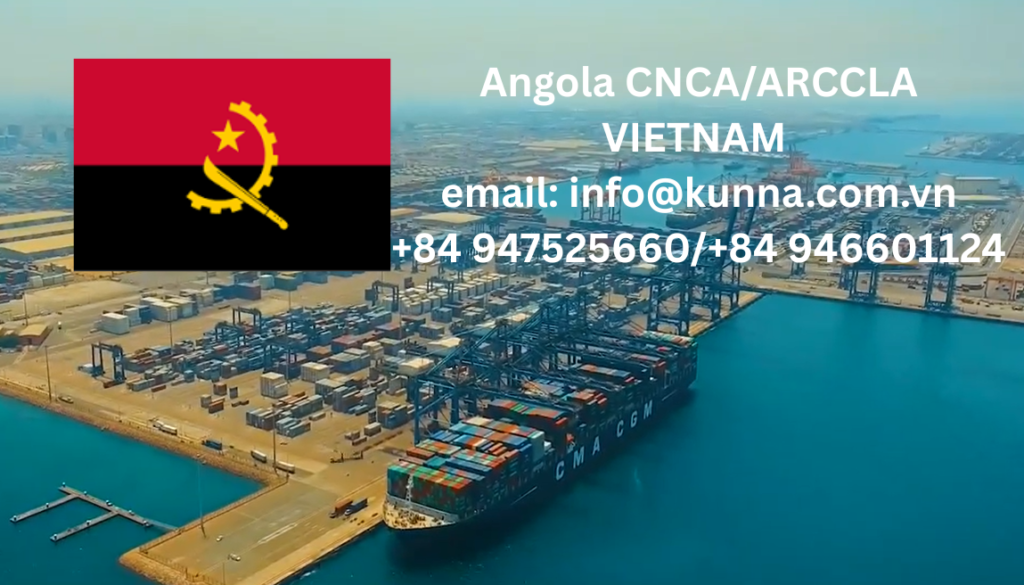
1. CNCA Certificate – Mandatory Requirement
One of the most important requirements for exports to Angola is obtaining a CNCA Certificate (Conselho Nacional de Carregadores de Angola).
This certificate confirms shipment details and enables Angolan authorities to control and monitor imported goods.
To apply for a CNCA Certificate, exporters must prepare:
-
CNCA Application Form
-
Commercial Invoice
-
Packing List
-
Bill of Lading
-
Sales Contract (if applicable)
⚠️ Without a valid CNCA Certificate, cargo may be refused entry at the port or subject to heavy fines.
2. Accurate Declaration in the CNCA Form
All details in the CNCA Form must be accurately filled out, including:
-
Name of Shipper and Consignee
-
Cargo description, weight, and quantity
-
Bill of Lading number, Port of Loading, and Port of Discharge (in Angola)
-
Vessel information
Note: The destination port in Angola must be correctly stated, as each port has its own handling procedures and requirements.
3. Verify Import Policies and Restricted Goods List
Before exporting to Angola, businesses should:
-
Verify the HS Code of their products
-
Check if the goods are restricted or prohibited for import into Angola
-
Identify if special licenses or permits are required (e.g., for electrical equipment, cosmetics, or food products)
Angola maintains strict import controls to protect domestic industries, so it is crucial to review regulations before shipment to avoid costly delays or penalties.
4. Language and Documentation Requirements
The official language of Angola is Portuguese. Therefore, many documents may need to be translated into Portuguese.
Additionally, some documents may require legalization or authentication by the Embassy of Angola.
Kunna Logistics can assist exporters in verifying and managing these special documentation requirements.
5. Monitor CNCA Approval and Vessel Schedule
The CNCA Certificate is usually issued within 1–3 working days, depending on the completeness of the documents. However, any errors or late submissions can delay the approval process and affect shipment schedules.
Exporters should prepare all required documents early and regularly check the vessel schedule to ensure smooth cargo delivery.
6. Choosing the Right Port in Angola
Angola has several key seaports, including:
-
Port of Luanda – The main and busiest port, handling most containerized cargo.
-
Port of Lobito – Conveniently connected by the Benguela railway across Angola.
-
Port of Namibe – Serves the southern region, mainly for bulk and mineral shipments.
-
Port of Cabinda – Supports the resource-rich Cabinda province, particularly oil exports.
Selecting the correct port not only simplifies CNCA processing but also helps reduce inland transportation costs after customs clearance.
Why Choose Kunna Logistics for Angola Exports?
✅ Expertise in handling CNCA Certificates and African shipping documentation
✅ In-depth understanding of Angola’s import and export regulations
✅ Accurate consultation – Fast processing – Risk minimization
✅ Comprehensive service covering documentation, shipping, and shipment tracking
Contact Kunna Logistics Today for Professional Support
KUNNA INT’L LOGISTICS JSC
🏢 Address: 6th Floor, 508 Le Thanh Tong, Ngo Quyen, Hai Phong, Vietnam
📞 Tel: +84.225.3750.486 | Fax: +84.225.3750.487
📱 Hotline: +84.947.525.660
📧 Email: info@kunna.com.vn | ceo.hq@kunna.com.vn
💬 Zalo / WhatsApp: +84.946.601.124
Kunna Logistics – Reliable Partner for CNCA Certificates and African Export Solutions
✅ Professional – Accurate – Transparent – No Hidden Fees